
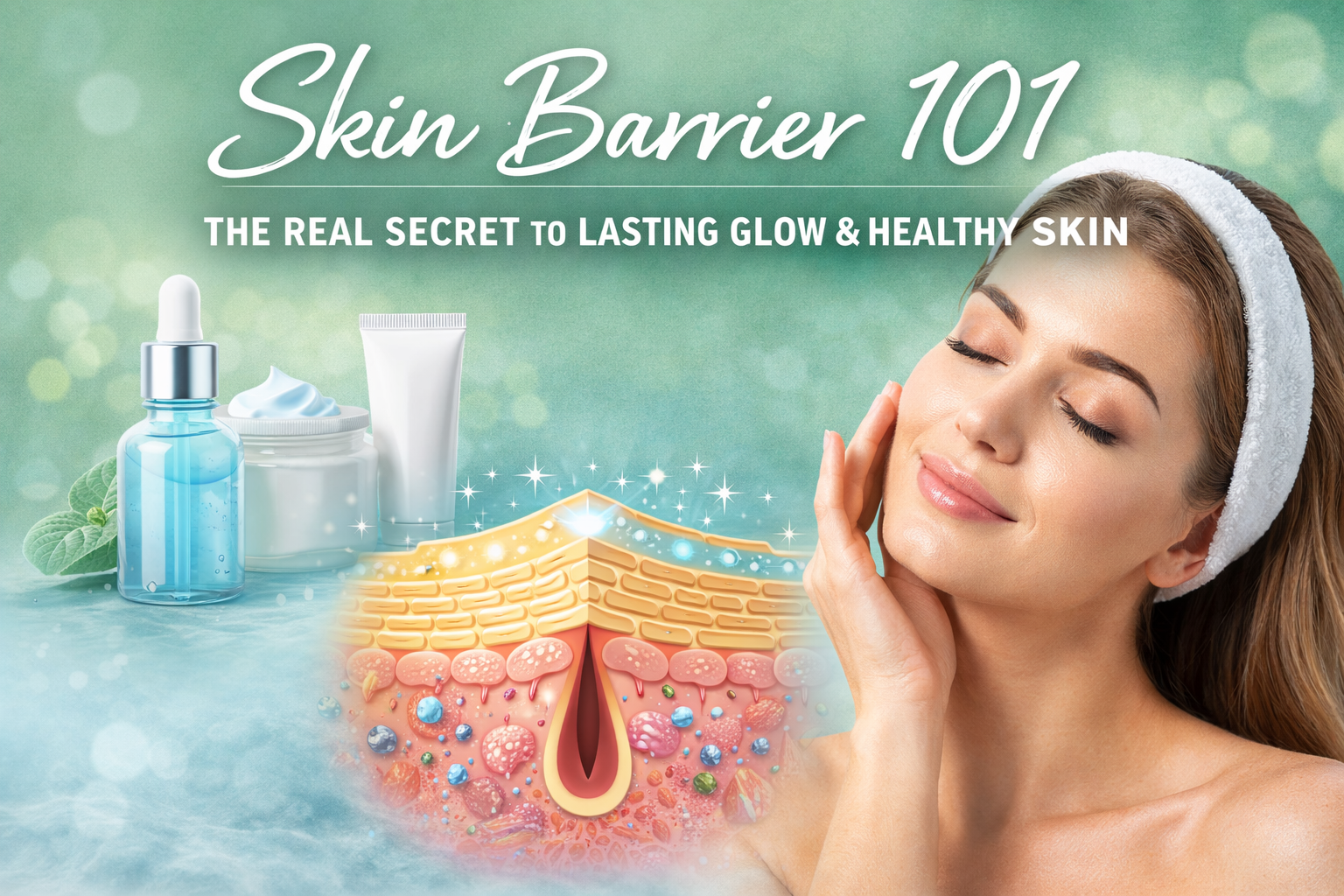
Skin Barrier 101: The Real Secret to Lasting Glow and Healthy Skin
In the world of skincare, trends come and go—brightening, anti-aging, glass skin, and instant glow. But behind every truly effective skincare routine lies one non-negotiable foundation: the skin barrier. Dermatologists and skincare experts now agree that protecting and repairing the skin barrier is the key to long-term skin health, hydration, and resilience.
If your skin feels irritated, tight, dry, or suddenly reactive, chances are your skin barrier is compromised. Understanding how it works and how to care for it can transform not just how your skin looks, but how it behaves every day.
What Is the Skin Barrier?
The skin barrier is the outermost layer of the skin, also known as the stratum corneum. It acts as a protective shield between your body and the outside environment. Made up of skin cells and lipids like ceramides, fatty acids, and cholesterol, the skin barrier locks in moisture while keeping harmful irritants, bacteria, and pollutants out.
When the skin barrier is healthy, your skin feels smooth, hydrated, calm, and balanced. When it’s damaged, moisture escapes easily and irritants penetrate deeper—leading to a cascade of skin concerns.
Why the Skin Barrier Is So Important
A strong skin barrier is essential for maintaining overall skin health. Without it, even the most expensive skincare products won’t deliver results.
Here’s what a healthy skin barrier does:
- Retains moisture and prevents dehydration
- Protects against environmental stressors
- Reduces sensitivity and inflammation
- Supports natural skin repair processes
- Maintains a smooth, even skin texture
When the skin barrier is compromised, skin becomes prone to redness, acne, pigmentation, premature aging, and chronic dryness.
Signs Your Skin Barrier Is Damaged
Many people unknowingly damage their skin barrier by overusing active ingredients or following aggressive skincare routines. Common warning signs include:
- Persistent dryness or flaking
- Stinging or burning when applying products
- Redness and inflammation
- Increased breakouts or sensitivity
- Sudden reactions to products you once tolerated
These symptoms indicate that your skin barrier is struggling to perform its protective role.
Common Causes of Skin Barrier Damage
Modern lifestyles expose our skin to multiple stressors that weaken the skin barrier over time. The most common causes include:
Over-Exfoliation
Using scrubs, acids, or peels too frequently strips away essential lipids that support the skin barrier.
Harsh Cleansers
Sulfate-heavy or high-pH cleansers disrupt the natural balance of the skin barrier.
Environmental Stress
Pollution, UV exposure, and extreme weather conditions gradually weaken the skin barrier.
Improper Product Layering
Using too many actives at once can overwhelm and inflame the skin barrier.
Key Ingredients That Repair the Skin Barrier
Restoring the skin barrier requires ingredients that mimic and replenish its natural structure. Look for products containing:
- Ceramides – Essential lipids that rebuild the skin barrier
- Niacinamide – Strengthens the skin barrier and reduces inflammation
- Hyaluronic Acid – Supports hydration while the skin barrier heals
- Cholesterol & Fatty Acids – Restore lipid balance
- Panthenol (Vitamin B5) – Soothes and repairs the skin barrier
Avoid alcohol-heavy formulas and fragrances when focusing on skin barrier repair.
How to Build a Skin Barrier-Friendly Routine
A gentle, consistent routine is the best way to protect your skin barrier.
1. Cleanse Gently
Use a mild, pH-balanced cleanser that cleans without stripping the skin barrier.
2. Hydrate Immediately
Apply hydrating products on damp skin to prevent moisture loss and support the skin barrier.
3. Use Actives Wisely
Limit exfoliating acids and retinoids while your skin barrier is healing.
4. Seal with Moisturizer
A barrier-repair moisturizer locks in hydration and reinforces the skin barrier.
5. Never Skip Sunscreen
UV damage is one of the fastest ways to break down the skin barrier.
The Role of the Skin Barrier in Acne and Aging
A compromised skin barrier often leads to acne flare-ups because bacteria penetrate more easily. Similarly, early signs of aging—fine lines and dullness—are worsened when the skin barrier cannot retain moisture.
By strengthening the skin barrier, skin becomes less reactive, more resilient, and naturally radiant. This is why modern dermatology focuses on barrier repair before aggressive treatments.
Professional Treatments for Skin Barrier Repair
For severely compromised skin, professional treatments can accelerate skin barrier recovery. Dermatologist-recommended facials and therapies focus on hydration, inflammation reduction, and lipid restoration.
These treatments help rebalance the skin barrier, making the skin more responsive to home care and long-term skincare solutions.
Skin Barrier Care Is the Future of Skincare
The skincare industry is shifting away from harsh, quick-fix solutions toward long-term skin wellness. The skin barrier is now recognized as the cornerstone of effective skincare.
When you prioritize skin barrier health, you reduce sensitivity, prevent premature aging, and achieve a natural glow that doesn’t rely on heavy makeup or constant treatments.
Conclusion
Healthy, glowing skin begins with a strong skin barrier. From preventing moisture loss to defending against environmental damage, the skin barrier plays a vital role in every skin type and concern. By choosing gentle products, avoiding over-exfoliation, and focusing on repair, you can restore your skin barrier and enjoy calmer, stronger, and more radiant skin.
Instead of chasing trends, invest in your skin barrier—because when your barrier is healthy, everything else falls into place.